
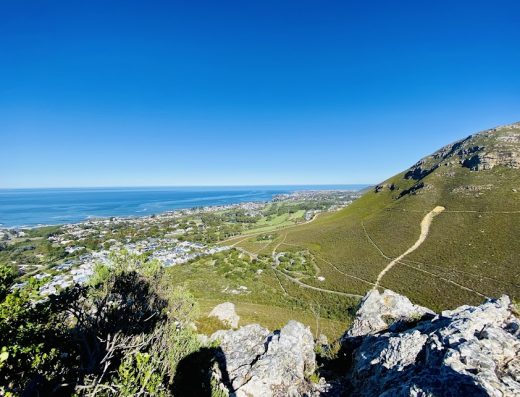
Spanning 12 km of pristine coastline, the Hermanus Cliff Path offers one of South Africa’s most breathtaking walks—from New Harbour to Grotto Beach. This scenic route is famed for its panoramic sea views and prime whale-watching opportunities.
Maintained by the Cliff Path Management Group, this well-marked and accessible trail passes through fynbos-covered cliffs, marine coves, tidal pools, and historic landmarks. Key features include the Old Harbour, scenic benches at Sievers Point, and the enchanting Milkwood forest near Piet-se-Bos. Informational plaques and occasional whale-watching platforms dot the path, enriching the experience for visitors.
Accessible for all fitness levels, the path allows for a full 12 km adventure or shorter segments via various entry points. Tuk-tuk shuttles are available in town for return transport.
Perfect for nature lovers, photographers, birders, and families with kids, this path offers a relaxing yet invigorating way to explore Hermanus. Whale season (June–November) is especially popular, but the route is stunning year-round thanks to the coastal flora and views.
Features
Location
FAQ
How long is the cliff path from New Harbour to Grotto Beach?
The trail stretches approximately 11–12 km one way.
How much time should I set aside for the walk?
Allow 3 to 4 hours for a one-way hike; round-trip could take 6–8 hours .
Can I walk it alone?
Yes—provided you stick to daylight hours. Walking solo is common, but groups are recommended in secluded spots .
Is the path wheelchair- or stroller-friendly?
Only some sections. Several flat, paved segments near the Old Harbour and from Voëlklip to Grotto are wheelchair/stroller accessible.
Are there safety concerns along the route?
- Walk during daylight; avoid secluded sections at night . - Watch your step—in some places, the path is uneven or narrow, with no railings . - Wildlife like snakes may be encountered under fynbos, so stay alert.
When is the best time for whale watching along this stretch?
The prime season is June through November, with peak land-based sightings typically in August–September.
Similar Listings

Add Review
Added By Sean Dunn

Leave a Reply